
You can animate a photo with AI in under a minute, and you do not need After Effects, a timeline, or a single keyframe to do it. The hard part is not the software; it is choosing a photo the model can interpret and giving it a motion idea that makes sense for what is in the frame. This is the practical guide we use ourselves: how to animate a photo with AI in 60 seconds, which photo types actually work, how to prep the source image, the prompts that land, and the settings that match every platform.
How to animate a photo with AI in 60 seconds (the short version)
The short version, the way most people will run it the first time:
- Upload one photo (JPG, PNG, or WEBP). Higher resolution is better.
- Pick a duration: 3 to 6 seconds covers ~95% of use cases.
- Pick an aspect ratio: 9:16 for Reels and Shorts, 16:9 for YouTube, 1:1 for in-feed posts.
- Optional: type a one-line motion prompt (or skip it and let the model pick a subtle ambient motion).
- Generate. A short clip lands in your library in roughly the time it takes to make a coffee.
- Download a watermark-free 1080p MP4 and post.
That is the entire workflow. The rest of this post is the difference between a clip that just runs and a clip you actually want to publish. Run the workflow now in our consumer flow if you want to follow along, or browse the longer-clip and start-frame options for more control.
Skip the reading and try it. Drop a photo into MakeAIVideo and you will have your first animated clip before this post finishes loading. 7-day free trial, $0 today, cancel anytime.
Which photos animate cleanly with AI?
Most bad animated photos are bad source photos in disguise. The model is generating in-between frames for whatever you give it, so the quality ceiling is set on upload. Photos that animate cleanly share four things: a clear subject, even lighting, at least one element that could plausibly move (hair, water, foliage, cloth, eyes), and enough resolution for the model to find features.
Photos that consistently struggle:
- Heavily compressed thumbnails or screenshots. Not enough texture for the model to work with.
- Very dark scenes. The model can't infer motion from features it can't see.
- Dense text or graphics-heavy images. Text warps under generative motion almost every time.
- Busy crowd shots. Too many subjects competing for the same motion budget.
- Heavy filters (Snapchat lenses, beauty filters, painterly stylings). The model misreads filtered features as the actual structure.
If you only have a compressed phone screenshot, most modern phone cameras and gallery apps can give you a sharper export in two taps; do that first. The same principle that Adobe Express's photo-animation tool, Vidu's AI image animator, and dedicated tools like PhotoAnimate all lean on quietly is "the source decides the ceiling".
How should you prep a photo before animating it?
Source-photo prep is the highest-leverage step beginners skip. Three quick wins that disproportionately improve output quality:
- Upscale low-resolution scans. A modest 2x upscale before upload almost always produces noticeably more natural motion than animating a thumbnail. Most modern phone gallery apps now ship an "enhance" toggle that does this in one tap.
- Denoise compressed JPEGs. If the photo came off social media, run any "auto-fix" once before animating. The model treats JPEG noise as detail and tries to animate it.
- Crop tight on the subject. If the focal point fills more of the frame, the model spends its motion budget where you want it instead of on background drift.
For old or black-and-white photos, the order matters: restore, then colorise, then animate. Animating a faded sepia print produces a faded sepia clip; animating a colorised, restored version produces something watchable. MyHeritage's Deep Nostalgia and similar restoration tools handle the first two stages well; animation is the third step, which is where our pipeline takes over.
How do you write a prompt to animate a photo?
You can skip the prompt entirely and let the model pick a subtle ambient motion. That works for portraits and landscapes. For anything else, a one-line motion prompt is the difference between "okay" and "post-worthy".
The pattern is motion verb + subject + qualifier:
- ❌ "Make it move" (too vague, model defaults to nothing)
- ❌ "Wind blowing through the trees on a stormy day with rain and lightning" (too many motion ideas, model averages them out)
- ✅ "Slow wind through her hair, soft camera push-in"
- ✅ "Drift clouds across the sky, gentle ripple on the water"
- ✅ "Subtle breath and slow blink"
- ✅ "Slow tail wag and ear twitch"
- ✅ "Soft camera dolly forward, ambient sway"
The single rule that matters: one motion idea per clip. If you want hair movement AND a head turn AND a smile, you are writing three clips, not one. (See our video script template post for the parallel rule on scriptwriting beats.)
Text is also no longer the only control surface. Luma's Ray3 Modify release, covered by TechCrunch, lets you hand the model a start frame and an end frame and have it generate the transition between them. That is the same instruction as a one-line prompt, expressed in pictures. If a prompt keeps missing, a second reference frame usually gets you there faster than a longer sentence.
Need motion-idea inspiration? The free video idea generator and video hook generator work for animation prompts too. No signup, runs in your browser.
How to animate a photo with AI: photo types that work (and how to set them up)
Different photos need different settings. Here is the use-case grid we ship with.
Portraits (one person, clear face)
Eyes, hair, and slight head turns are exactly what today's motion models do best, because faces give the model strong anchor points to build coherent in-between frames. Soft, even lighting and a sharp face make or break the result.
Settings: 3 to 5 seconds, 9:16 vertical for social or 1:1 for profile use. Prompt for "subtle breath, slow blink, gentle hair movement" rather than head turns over 15 degrees, which is where uncanny starts.
Old family photos (scanned prints, black-and-white, faded)
Old photos carry the most emotional payoff but the least data; resolution and contrast are usually the bottleneck, not the model. Restoring before animating almost always beats animating raw.
Settings: Upscale and optionally colorise first; 3 to 4 seconds, square or 4:5; prompt for "a single breath, soft ambient motion" to avoid uncanny over-animation. This is the workflow we recommend for the "how to animate an old photo with AI" use case specifically.
Landscapes with sky and water
Skies, clouds, rivers, and foliage have natural motion the model already understands, so it can drift them convincingly without inventing new geometry. Almost a free win.
Settings: 5 to 6 seconds, 16:9 horizontal; prompt for "slow cloud drift, gentle water ripple, soft camera push-in"; render at 1080p where possible.
Pets (one animal, head and shoulders visible)
Pets are portrait-like to the model: ears, fur, and tail motion read naturally as long as the eyes are sharp in the source. Multi-pet shots get harder fast.
Settings: 3 to 4 seconds, 1:1 or 9:16; prompt for "slow tail wag, ear twitch, soft blink"; avoid motion that involves the pet leaving the frame.
Product photography (e-commerce flat-lay or hero shots)
Adds warmth and dwell time to listings and ads without re-shooting. Works best on single-product hero shots with clean backgrounds; busy flat-lays confuse the model.
Settings: 3 seconds, 1:1 or 4:5; prompt for "slow rotation, soft light shift, subtle bokeh drift"; export 1080p MP4 for ad platforms.
Group photos (2 to 5 people)
All faces animate at once, so the model needs every face to be roughly the same scale and lit similarly. Wedding rows and family portraits work; crowd shots do not.
Settings: 4 to 5 seconds, 16:9 or 4:5; prompt for one shared motion idea ("gentle laugh, soft sway") rather than per-person direction.
Travel photos with a horizon
Mountains, beaches, cityscapes give the model both a foreground subject and an ambient background it can drift independently, which reads as cinematic depth.
Settings: 5 to 6 seconds, 16:9; prompt for "slow parallax push, ambient wind, drifting clouds"; ideal for travel vertical clips on Instagram and slideshow openers.
Art and illustration (paintings, anime, digital art)
Stylised inputs animate well because the model is not trying to preserve photographic realism; it can interpret texture as motion more freely. Watch for style drift on long clips. For anime specifically (one of the most popular animation styles for the whole photo-to-video job), the anime video pipeline wraps the animated still in a finished narrated cut with the anime aesthetic held across every generated scene rather than only the input frame.
Settings: 3 to 4 seconds, original aspect ratio; prompt with a verb plus a style note ("drift like a Studio Ghibli scene, slow camera push"); keep clips short to hold the style.
How to animate an old photo with AI without it looking uncanny
Old-photo animation is its own discipline. The dominant guides on this space (animateoldphotos.org and MyHeritage Deep Nostalgia) over-index on memorial use; the model itself doesn't care about the context, but the output choices that read as respectful (rather than crass) are specific.
The order:
- Enhance the photo with a restoration tool first. Crop and dust-spot removal matter more than they sound.
- Colorise if the photo is black-and-white. Colorised motion reads as a moment; B&W motion reads as a special effect.
- Animate with subtle motion only. Single breath, slow blink, gentle hair movement. Avoid full head turns or dramatic smiles for photos of people from another era; subtlety reads as life, drama reads as deepfake.
The ethical line worth knowing: animating a photo of someone who can't consent (the deceased, a public figure, a stranger) is a personal call, not a technical one. The tool will not stop you; your audience will form an opinion either way, and the public mood is not neutral on this. Pew Research Center found that 77% of US adults say steps should be taken to restrict altered videos and images intended to mislead, and 63% say made-up or altered videos and images create a great deal of confusion about the facts.
Regulators have moved the same way. The FTC finalised its Government and Business Impersonation Rule in February 2024 and proposed extending the ban to impersonation of individuals, citing AI-generated deepfakes and voice cloning. Animating your own family photo for your own family sits nowhere near that line. Animating a stranger or a public figure and publishing it as though it were real footage does.
What duration, aspect ratio, and resolution should you export?
Pick the platform before you generate; the model frames the motion around the ratio you choose. The targets below track Sprout Social's platform video specs, which lists Reels, TikTok and YouTube Shorts at 9:16 and 1080x1920, with Shorts accepting clips up to three minutes.
| Platform | Duration | Aspect ratio | Notes |
|---|---|---|---|
| Instagram Reels, TikTok, YouTube Shorts | 3 to 6s | 9:16 vertical | Short clips loop cleanly; longer drifts on faces |
| Instagram feed, Facebook | 3 to 4s | 1:1 square or 4:5 | 4:5 fills more of the feed than 1:1 |
| YouTube (long-form, embeds) | 5 to 6s | 16:9 landscape | Good for slideshow openers + b-roll |
| LinkedIn, presentations | 3 to 5s | 16:9 or 1:1 | Keep motion subtle for professional context |
| Stories (24-hour) | 3 to 5s | 9:16 vertical | Same as Reels; consider 4 seconds for repeatability |
Render at 1080p when you can. Downscaling looks fine; upscaling rarely does. For vertical-feed work, the same source can also feed our shorts pipeline or the TikTok flow for fully narrated, captioned variants.
What AI changes vs the old Ken Burns and keyframe playbook
Older animation methods (Ken Burns slow-zooms, parallax effects, frame-by-frame keyframing in After Effects) fake motion by moving a static pixel grid. The subject never actually turns, breathes, or shifts weight; the camera does all the work. Generative AI flips that: the model invents the missing frames between your photo and a plausible next moment, so a portrait can blink, hair can catch wind, and water can ripple without you touching a single keyframe.
The money behind that shift is not small. Statista's generative-AI market forecast puts the category at $394.66bn worldwide in 2026, growing at a 12.60% CAGR to $804.33bn by 2032. Practically, that means the model you animate a photo with today is not the model you will be animating with in six months, and the failure modes below move with it.
The trade-off is a learning curve around prompting and choosing photos the model can interpret cleanly, which is what the rest of this post covers. The old skill (timeline animation, ease curves, parallax layering) is largely gone; the new skill (source-photo selection, one-line prompting, knowing failure modes) takes about an afternoon to learn. Most of that learning happens inside MakeAIVideo's editor on the second or third re-roll. If you want to compare the raw generative-clip models that sit underneath this category (Sora, Kling, Pika, Luma), the Runway alternatives roundup tests them on the same prompts, and our Kling-focused sibling roundup benchmarks Kling AI against its 7 direct rivals.
Common failure modes and how to fix them
The four most common ways an animated photo goes wrong, in our experience running thousands of these:
- Melting faces. Source is too low-resolution or too heavily filtered. Fix: upscale before animating, or pick a sharper source.
- Warping limbs. Prompt is too ambitious for a single clip (e.g. "she waves her hand and turns to camera"). Fix: one motion idea per clip; save the second motion for a second render.
- Background drift. Busy scene with no clear anchor point. Fix: crop tighter on the subject so the model knows what to keep stable.
- Over-animated stillness. Prompt is too vague ("make it move") and the model defaults to an exaggerated camera dolly. Fix: name the motion explicitly, even a tiny one ("subtle breath, slow blink").
If a render misses, regenerate rather than rewrite. Image-to-video is stochastic; the same source and prompt produce noticeably different motions each time, and the cheapest fix is usually another roll. Most of the image-to-video pipeline is built around this assumption (cheap re-rolls, no penalty for trying twice).
How do you add narration or music to an animated photo?
An animated photo on its own is a Reel-shaped artefact, and that shape has the audience to justify it. Backlinko's video marketing roundup reports roughly 200 billion Reels watched each day across Instagram and Facebook, and around 63% of consumers saying they prefer short videos when learning about a new product.
To turn a clip into a story, wrap it in narration: paste a one-line script into Prompt to Video or run a full Script to Video render with your animated clip as the first or last scene. Music is the simpler version: drop the clip into the editor of your choice and use whatever short-form audio you already trust.
For a longer narrative piece (memorial slideshow, family timeline, travel recap), animate three to five photos at the same aspect ratio, stitch them in a basic editor, and add one continuous voiceover; the MakeAIVideo pipeline handles all of that in one render if you want to skip the stitching. If your source material is a written piece (a tribute essay, a travel blog post, a family history), the article-to-narrated-video flow can sit upstream of your animated photo and treat each clip as one scene in the longer render.
Try it in under a minute. Animate your first photo with AI → (7-day free trial, $0 today, cancel anytime). No After Effects required.
Frequently asked questions
How long does it take to animate a photo with AI?
Most short clips (3 to 6 seconds) finish generating in under a minute on a typical render queue, with another few seconds for the page to load the preview. Longer durations and higher resolutions take proportionally longer.
What photos animate well, and which ones do not?
Photos with a clear subject, even lighting, and at least one element that could plausibly move (hair, water, foliage, cloth, eyes) animate cleanly. Heavily compressed thumbnails, very dark scenes, busy crowds, and text-heavy graphics tend to produce mushy or warped results.
Can AI animate old or black-and-white photos?
Yes, but you will get better motion if you upscale and (optionally) colorise the photo first, then animate. A higher-resolution input gives the model more facial and edge detail to anchor the generated frames to.
Do I need to write a prompt?
Not always. A short motion prompt ("slow wind through her hair, soft camera push-in") gives you more control, but you can leave it blank and let the model pick a subtle ambient motion. We recommend writing a one-line prompt for anything beyond a casual test.
What resolution and aspect ratio should I export?
Match the destination: 9:16 vertical for Reels, Shorts, and TikTok; 1:1 square for in-feed posts; 16:9 horizontal for YouTube and presentations. Render at 1080p when you can, since downscaling looks fine but upscaling rarely does.
Will the animated face look like the person in the photo?
For clear, well-lit portraits, yes. For low-resolution or partially obscured faces, the model has to guess at features and the likeness can drift. Use the highest-quality source image you have and avoid heavy filters before animating.
Can I animate a photo with more than one person in it?
Yes, and the model will animate everyone in frame at once. Keep prompts simple (one shared motion idea rather than per-person directions) and expect the strongest results when faces are roughly the same size and similarly lit.
How long should the clip be?
Three to six seconds is the sweet spot for social and storytelling use. Shorter clips loop cleanly; longer clips give the model more chances to drift, especially with faces and hands.
What does it cost to try?
Sign up starts a 7-day free trial, $0 today, cancel anytime. You can run our free tools without a trial for prep work like resizing, hooks, and captions. See pricing for the full plan breakdown and the terms for commercial-use details.
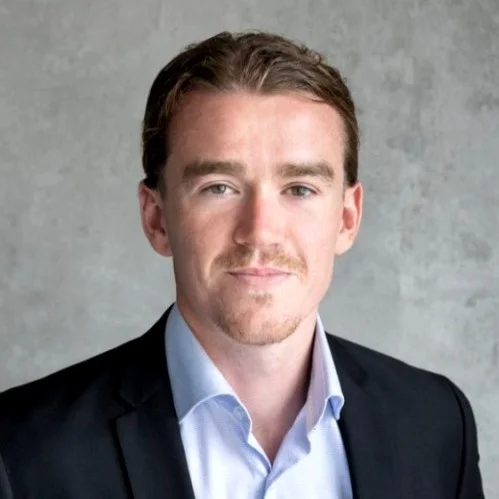
Written by Jamie Partridge
Founder at MakeAIVideo. Writing about AI video generation, scripting, scenes, and shipping content faster.